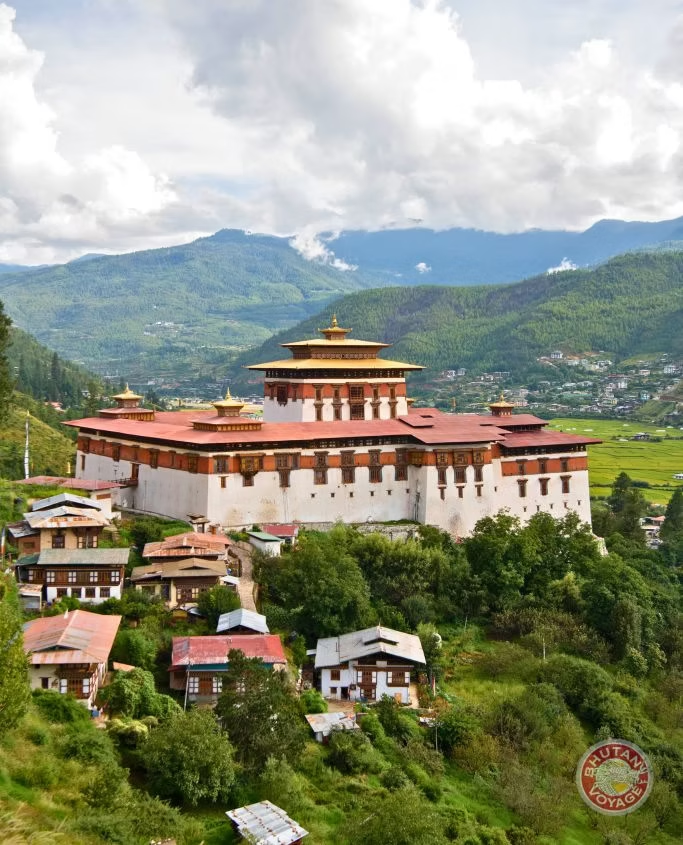
High within the jagged peaks of the Himalayas lies Bhutan, the “Land of the Thunder Dragon,” a kingdom where spirituality is woven into the very fabric of daily life. For centuries, Bhutanese monasteries, or Dzongs and Goembas, have served as sanctuaries for Mountain Meditation—a practice that transcends simple relaxation to touch the core of human consciousness.
As the world becomes increasingly fragmented by digital noise, the ancient wisdom of Bhutanese meditation offers a path back to clarity. In this guide, we explore the fundamental techniques practiced in these high-altitude sanctuaries and how you can integrate this “Mountain Mindset” into your modern life.
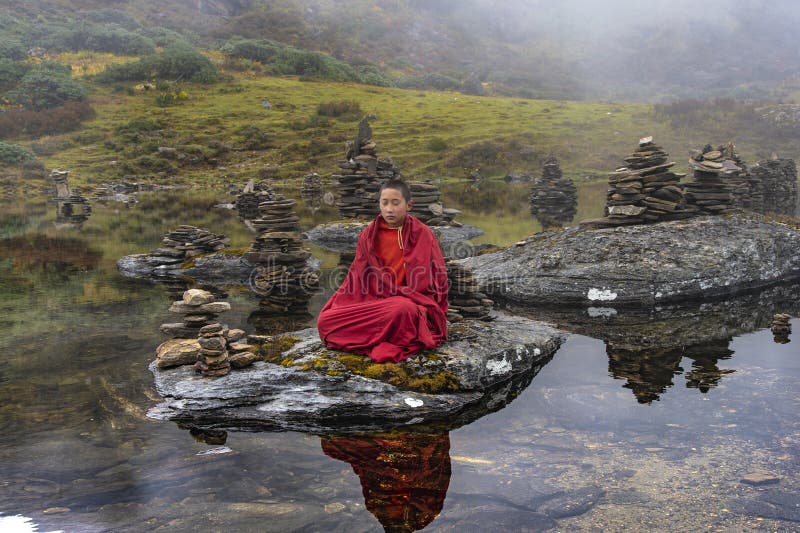
The Essence of Bhutanese Meditation
In Bhutan, meditation is not viewed as an escape from reality, but rather a profound engagement with it. It is heavily influenced by Vajrayana Buddhism, which emphasizes the transformation of the mind through visualization, breath, and the environment.
The “Mountain” in Mountain Meditation is both literal and metaphorical. Literally, the high altitude and thin air of the Himalayas require a specific physiological focus. Metaphorically, the mountain represents the “Unshakable Mind”—a state of being that remains still and majestic regardless of the storms (thoughts) passing over it.
Core Techniques from the Ancient Monasteries
If you were to step into a centuries-old monastery like Tiger’s Nest (Paro Taktsang) or Gangtey Goemba, you would encounter these three foundational pillars of practice:
1. Shamatha (Calm Abiding)
The starting point for any practitioner is Shamatha. The goal is to stabilize the mind, which is often compared to a “wild monkey.”
The Technique: Sit in a comfortable cross-legged position. Focus your gaze slightly downward, not fixed on any object but resting in “open awareness.”
The Focus: Follow the natural rhythm of your breath. In the high altitudes of Bhutan, monks teach students to notice the coolness of the air entering the nostrils and the warmth as it leaves.
The Result: A gradual slowing of the internal dialogue, leading to a state of calm stability.
2. Tonglen (Giving and Taking)
Unique to the Himalayan tradition, Tonglen is a powerful practice of compassion. It turns the traditional idea of meditation on its head by asking the practitioner to “breathe in” suffering and “breathe out” relief.
The Technique: On the inhale, visualize taking in the dark, heavy energy of stress or suffering (your own or the world’s). On the exhale, visualize sending out bright, healing light and happiness.
The Bhutanese Perspective: This practice is used to dissolve the ego and develop a “Heart of Gold,” an essential trait for the Academic Nomad seeking to connect with diverse cultures.
3. Sky-Like Mind (Open Presence)
Bhutanese monasteries are often perched on cliffs overlooking vast valleys. Monks use this physical vastness to practice “Sky-Like Mind” meditation.
The Technique: Instead of focusing on the breath, you focus on the space itself. Allow thoughts to arise like clouds in a blue sky. Watch them drift in and out without trying to catch them or push them away.
The Wisdom: You realize that you are the sky (the vast awareness), not the clouds (the passing emotions).
Why the Himalayan Environment Matters
The geography of Bhutan plays a crucial role in the success of these techniques. This is what modern architects call Biophilic Design—the idea that our environment dictates our mental state.
Silence and Soundscapes: The absence of industrial noise allows the brain to enter “Alpha” and “Theta” wave states more easily. The sound of prayer wheels and wind chimes acts as a natural metronome for the meditative mind.
Altitude and Breath: The lower oxygen levels at high altitudes (above 2,500 meters) naturally force a practitioner to breathe more deeply and intentionally, which activates the parasympathetic nervous system.
Bringing the Monastery to Your Home
You don’t need to be in the Himalayas to benefit from Bhutanese wisdom. To create a “Mountain Space” in your own home:
Natural Elements: Incorporate wood, stone, and indoor plants. Bhutanese architecture relies on these to ground the spirit.
The Ritual of Tea: Before meditating, engage in a slow tea ceremony. In Bhutan, butter tea is common, but any herbal infusion will work to signal to your body that it is time to be still.
Digital Fasting: Ensure your meditation space is a “Dead Zone” for electronics. The sanctity of the monastery comes from its disconnection from the mundane world.
The Benefits of Mountain Meditation in 2026
In our fast-paced, SEO-driven digital world, practicing these ancient techniques yields tangible benefits:
Enhanced Focus: Training the mind to stay “still as a mountain” improves productivity and the ability to engage in Deep Work.
Emotional Resilience: Practices like Tonglen build the emotional muscle needed to handle the challenges of global travel and digital strategy.
Perspective Shift: Viewing your life from the “summit” of your consciousness helps you distinguish between urgent tasks and truly important goals.
Conclusion: Finding Your Inner Bhutan
Mountain Meditation is more than a technique; it is a way of being. By adopting the calm abiding of Shamatha and the vast perspective of the Sky-Like Mind, you carry the spirit of the Bhutanese Himalayas with you wherever you go. Whether you are a traveler exploring the valleys of Paro or a professional navigating a busy city, the “unshakable mountain” within you is always accessible.
Bhutanmusktravels invites you to explore not just the physical peaks of the world, but the inner heights of your own potential.