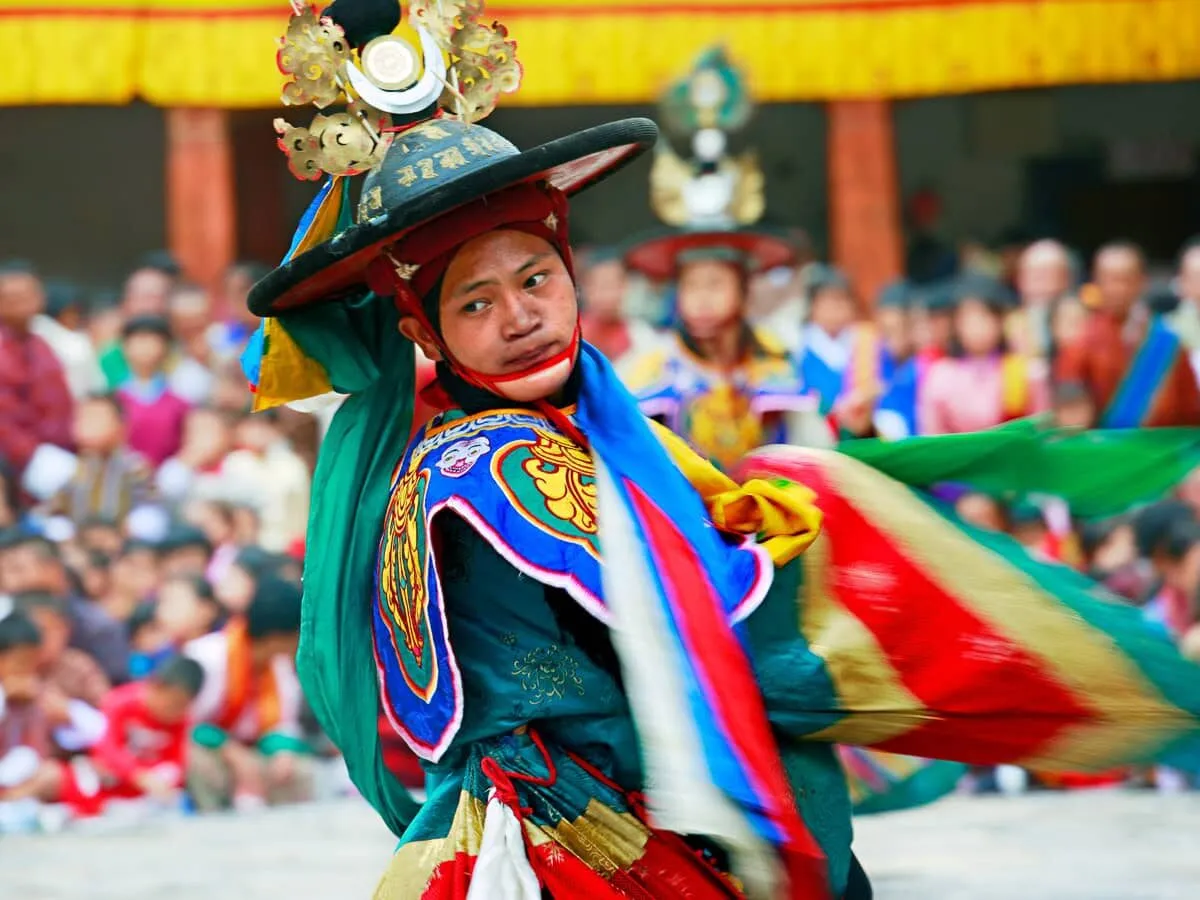
In the high-altitude valleys of the Himalayas, where the air is thin and the spirituality is dense, the Tsechu is the heartbeat of Bhutanese culture. For the uninitiated traveler, entering a Tsechu festival in 2026 is like stepping into a living, breathing tapestry of the 8th century. It is a sensory explosion of silk brocade, thunderous drums, and, most importantly, the Cham—the sacred mask dances that are far more than mere performance.
This guide is designed for the intellectual traveler and the “Academic Nomad” who seeks to understand the deep symbolism behind the masks and the spiritual mechanics of Bhutan’s most iconic celebration.
1. What is a Tsechu?
The word Tsechu literally translates to “Tenth Day.” These festivals are held annually in various districts on the tenth day of a month of the Bhutanese lunar calendar, corresponding to the birthday of Guru Rinpoche (Padmasambhava), the saint who brought Tantric Buddhism to Bhutan.
For the Bhutanese, a Tsechu is a religious obligation. It is believed that everyone must attend a Tsechu and witness the mask dances at least once in their life to wash away their sins and receive blessings.
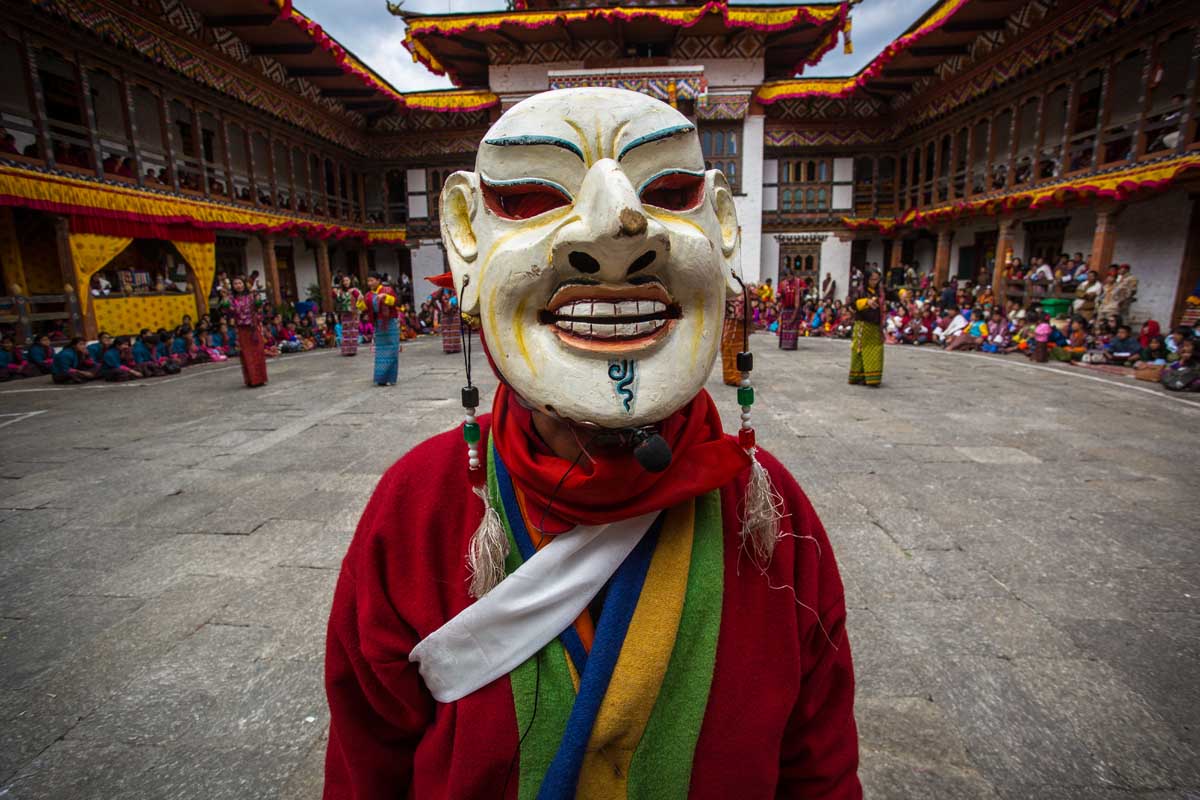
2. The Spiritual Mechanics of the Cham (Mask Dances)
The Cham are not “folk dances” for entertainment; they are a form of visual dharma (Buddhist teachings).
Embodying the Deity: The dancers, often monks or trained laymen, undergo weeks of meditation and purification rituals before the festival. When they don the mask, they are believed to lose their earthly identity and become a vessel for the deity, demon, or animal they represent.
A Moveable Mandala: The dance floor in the courtyard of a Dzong (fortress-monastery) is considered a sacred mandala. The circular movements of the dancers are designed to subdue evil spirits and harmonize the energy of the land.
3. Key Mask Dances to Watch for in 2026
While there are dozens of different dances, these are the three most significant for any beginner to recognize:
A. Guru Tshengye (The Eight Manifestations of Guru Rinpoche)
This is arguably the most important dance. It depicts the eight forms that Guru Rinpoche assumed to bring Buddhism to different regions.
What to look for: A grand procession where eight different masked figures appear, ranging from the peaceful Guru Shakya Senge to the wrathful Guru Dorje Drolo.
B. Raksha Mangcham (Dance of the Guard of the Dead)
This is a profound, theatrical piece about the afterlife. It depicts the judgment of a deceased person by the Lord of Death (Shinje).
The Symbolism: You will see a white deity representing good deeds and a black demon representing bad deeds. It is a vivid reminder of Karma—the belief that our actions in this life dictate our future path.
C. Drametse Nga Cham (Dance of the Drums from Drametse)
Recognized by UNESCO as a Masterpiece of the Oral and Intangible Heritage of Humanity, this dance features performers in animal masks beating flat hand-drums.
The Experience: The synchronized rhythm and the high-leaping movements are meant to represent the liberation of the soul.
4. Decoding the Masks
In Bhutanese art, colors and expressions are a language of their own.
Wrathful Masks: Often terrifying with bulging eyes and fangs. These represent the “Protectors of the Dharma.” Their anger is not directed at people, but at the ego and ignorance that prevent enlightenment.
Animal Masks:
The Garuda: A mythical bird that subdues the “Nagas” (spirit-serpents) of the earth.
The Deer: Represents the subduing of the god of death.
The Atsara (The Clowns): You will notice figures with red, long-nosed masks acting lewdly or making jokes. These are the Atsaras. They represent enlightened masters who use humor to challenge our rigid perceptions of “sacredness” and to keep the crowd entertained during long ceremonies.
5. Essential Etiquette for the Conscious Traveler
Attending a Tsechu is a privilege. To respect the sanctity of the event, follow these guidelines:
Dress Code: While locals wear their finest Gho (for men) and Kira (for women), visitors should wear modest, formal clothing. Shoulders and knees must be covered.
Photography: You are generally allowed to take photos in the courtyards, but never inside the temples (Lhakhangs). Always ask your guide before using a flash, as it can distract the dancers in a trance-like state.
Silence during Rituals: When the Thongdrel (a giant sacred scroll) is unfurled at dawn, maintain silence. It is a moment of deep prayer and reflection for the locals.
6. Planning Your 2026 Pilgrimage: Key Dates
If you are planning your journey for 2026, these are the headline festivals to consider:
| Festival Name | Location | Expected Dates (2026) |
| Punakha Tshechu | Punakha Dzong | February 22 – February 28 |
| Paro Tshechu | Paro Dzong | March 29 – April 2 |
| Thimphu Tshechu | Tashichho Dzong | September 21 – September 23 |
| Jambay Lhakhang Drup | Bumthang | October 26 – October 29 |
Note: As an Academic Nomad, the Jambay Lhakhang Drup in Bumthang is highly recommended for its intimate atmosphere and unique “Fire Dance” (Mewang).
Conclusion: More Than Just a Spectacle
The Tsechu is a reminder that in Bhutan, the spiritual and the physical are not separate. Witnessing the sacred mask dances is an invitation to look inward. As the drums beat and the silk swirls, you aren’t just watching a festival; you are participating in a thousand-year-old ritual of purification and joy.
Are you ready to witness the living faith of the Himalayas? Pack your curiosity and your respect, and let the masks of Bhutan tell you their story.